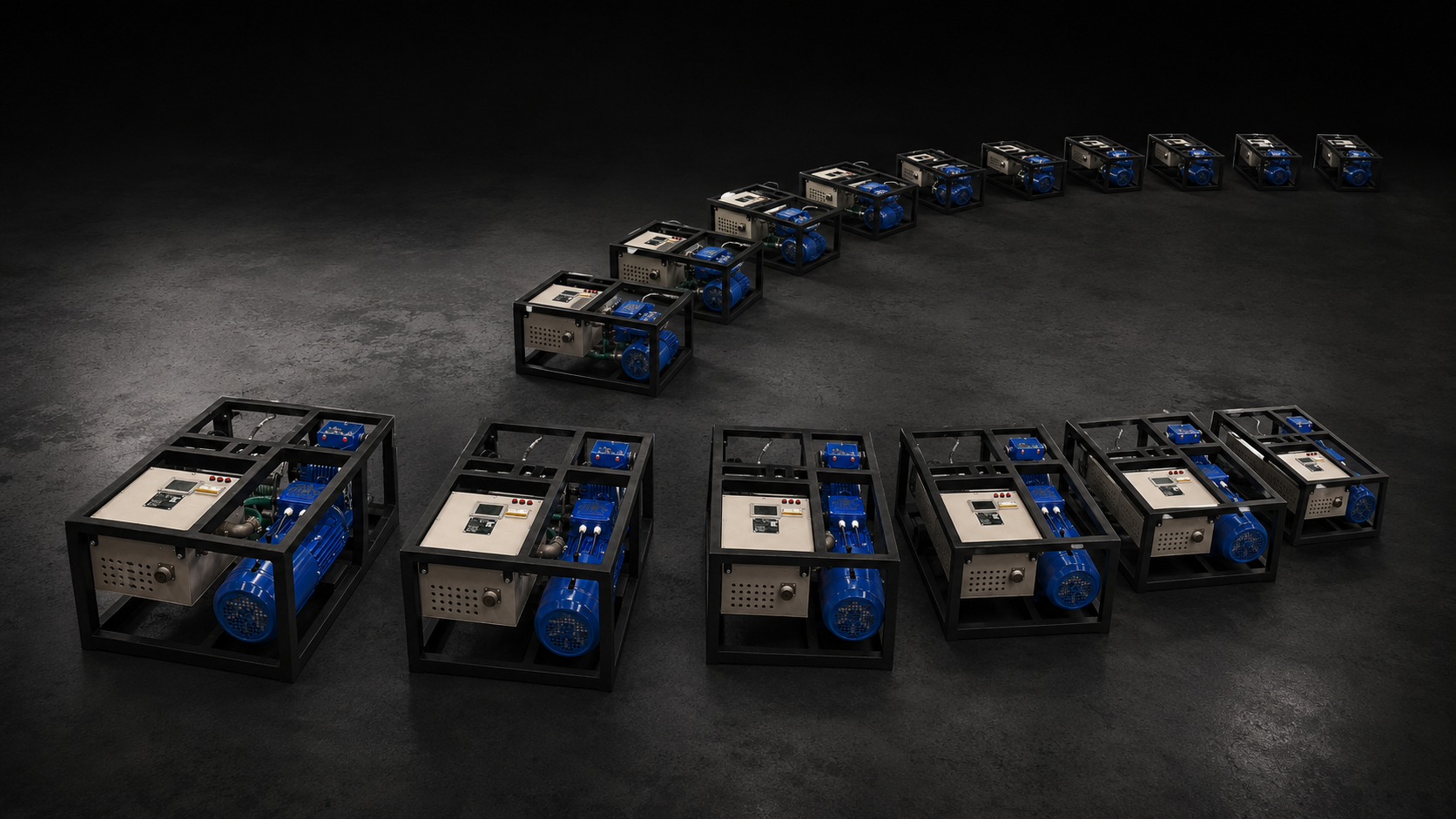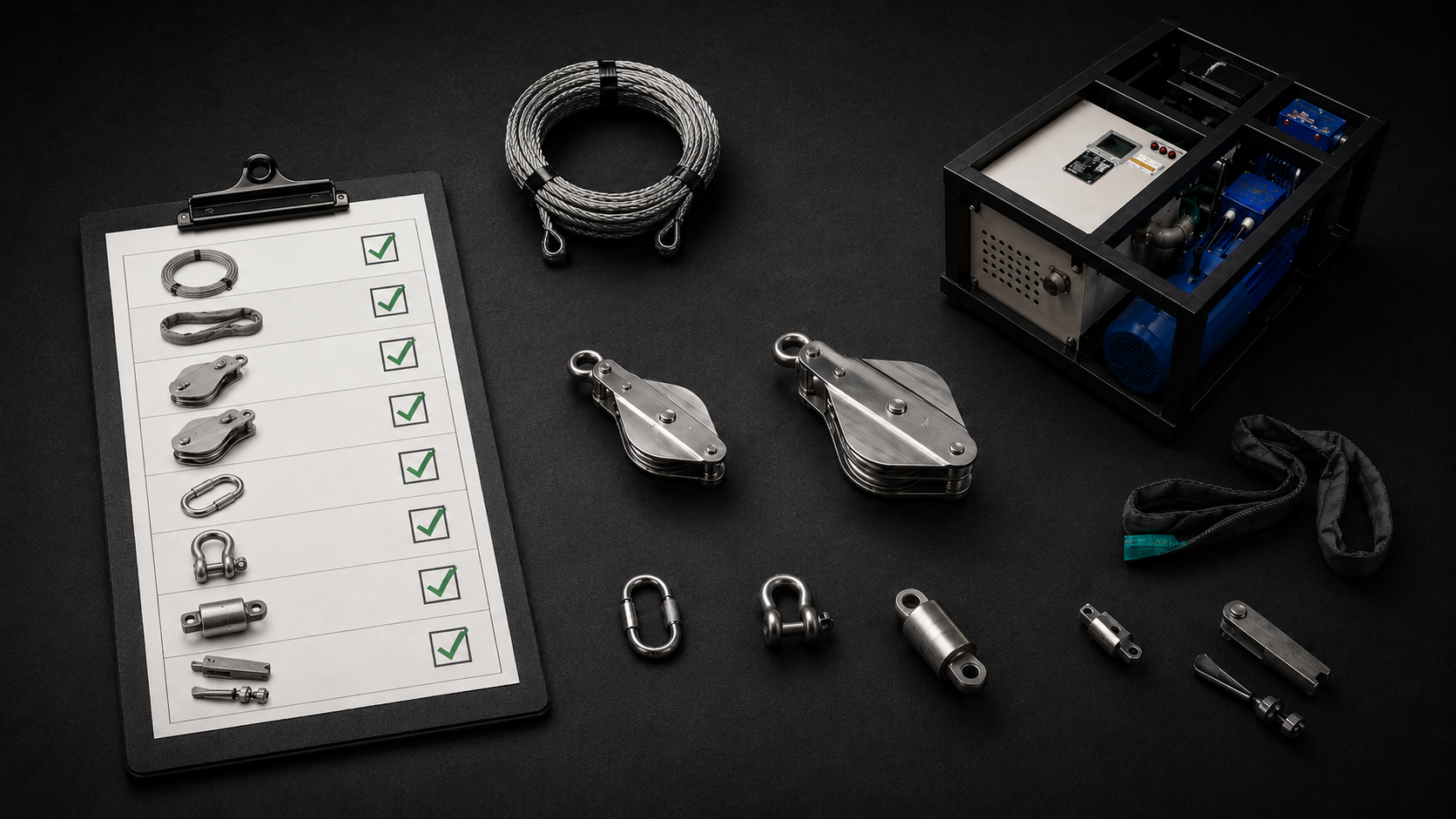
Event equipment preparation starts before loading. The crew needs the kit list, installation layout, mechanism condition, spare connecting elements and venue acceptance procedure before the truck leaves. This prevents a last-hour search for a cable, shackle or document before rehearsal.
This workflow fits kits with winches, pendants, pulleys, rigging, safety elements and stage equipment. Use it as a base for an internal warehouse or technical-team checklist.
Equipment set
Check the equipment against the installation layout and project request. The kit must include every item needed to start installation: mechanisms, pendants, power and control cables, pulleys, slings, shackles, carabiners, fasteners, consumables, tools and spare connecting elements.
For each item, record quantity, marking, working load, cable or rope length, installation position and the person responsible for inspection. If an item is replaced with an equivalent, record the change before dispatch and agree it with the project engineer.
Documents and installation layout
Prepare the suspension or installation layout, equipment passports, manuals, inspection records, check log and responsible-person contacts. Documents should travel with the kit or be available to the installation crew in digital form.
Mark attachment points, load direction, winch and pulley positions, cable routes, operator position and danger zones on the layout. If the venue has sent a plan or suspension limits, include them with the kit.
Mechanical inspection
Before packing, inspect frames, drums, fasteners, pulleys, rollers, shafts, guards and connection points. Check for cracks, deformation, play, corrosion, impact marks and unusual sounds during rotation.
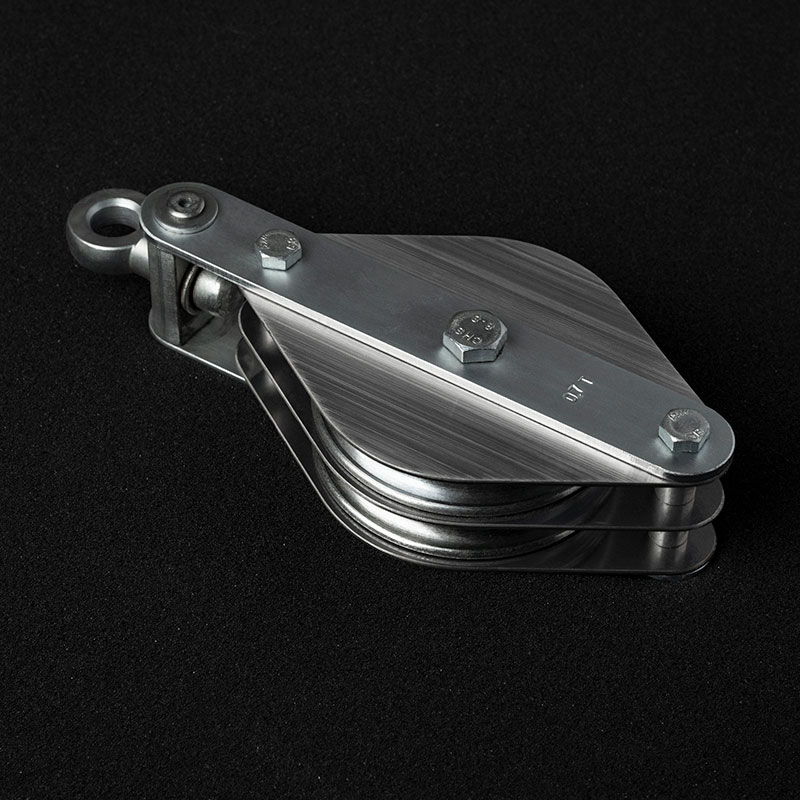
For winches, check drum attachment, rope condition, winding, brakes, travel limiters and emergency stop. For pulleys, check free roller rotation, absence of sharp edges and rope-diameter compatibility.
Electrics and controls
Run a functional test before dispatch. Connect power and check the pendant, movement direction, stop, emergency button, limit devices, indication and cables. For computer control, also check controller communication, movement cues, device addresses and a backup of settings.
Inspect connectors, cable glands, insulation, marking and strain relief. Cables with damaged jackets, overheated contacts or unknown marking do not go to the venue until checked.
Rigging and safety elements
Check shackles, carabiners, slings, ropes, swivels, turnbuckles and clamps. Each element needs readable marking, known working load and sound condition. Inspect textile elements along their full length; check metal parts for deformation, corrosion, cracks and thread wear.
Pack a reserve: several shackles of the right size, extra carabiners, textile protection, marking tags, consumable fasteners and tools for securing connections. The reserve does not replace calculation, but it reduces small organizational risks on site.
Packing and marking
Pack the kit so the installation crew can find items quickly. Separate mechanisms, cables, rigging, documents and tools. Mark boxes with the project, package number, weight, lifting side, fragile elements and content list.
Protect connectors, pendants, sensors and cables from moisture, impact and bending. Fix heavy items inside packaging so they do not shift during transport. Place the first-installation-stage items separately if the venue requires fast unloading.
Venue acceptance
After delivery, check package count, packing condition and kit completeness. Record damage, impact marks, moisture or lost marking before installation begins. Then compare actual attachment points, power supply and cable routes with the layout.
Before first power-up, check voltage, grounding, operator position, free rope travel, danger zone and crew communication. Run the trial movement without the performer and without unnecessary people below the suspension.
Pre-dispatch checklist
- Kit: items checked against request and installation layout.
- Documents: passports, manuals, inspection records and layout prepared.
- Mechanics: frames, drums, pulleys, ropes and brakes inspected.
- Electrics: pendants, cables, emergency stop and limit devices checked.
- Rigging: marking, working load and element condition confirmed.
- Reserve: connecting elements, fasteners, protection and tools added.
- Packing: packages marked, contents fixed, connectors protected.
- Responsible people: assigned for dispatch, installation and venue acceptance.
After the event
Returned equipment prepares the next project. After dismantling, check completeness, record damage, clean dust and moisture, dry textile elements, and rewind cables and ropes without kinks.
Enter venue notes in the log: what worked, what was missing, which elements need repair or replacement. The next dispatch will be faster if the warehouse receives a clear action list right after the kit returns.